
AmerCable History
The History of AmerCable
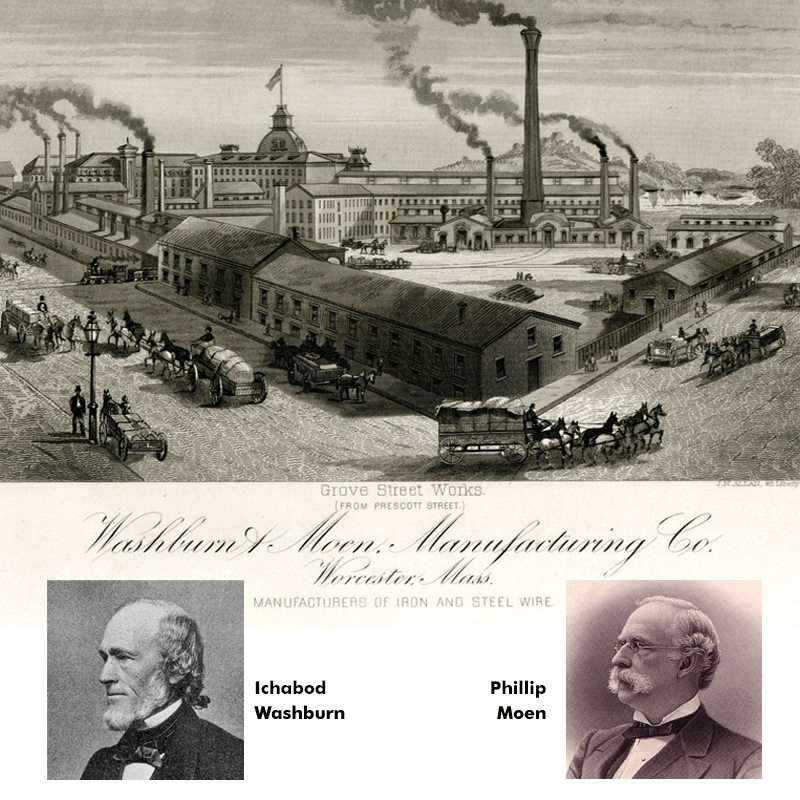
The Washburn and Moen Manufacturing Company, founded in Worcester, Massachusetts in 1831, was a 19th-century industrial powerhouse. It is best remembered for helping tame the American frontier, achieving a monopoly on barbed wire by purchasing Joseph Glidden’s patent rights in 1874. The company grew into one of the largest wire producers in the United States, utilizing innovations like the continuous wire rod mill and automatic reels. Its operations expanded significantly across the country by producing iron, steel and copper wire products.
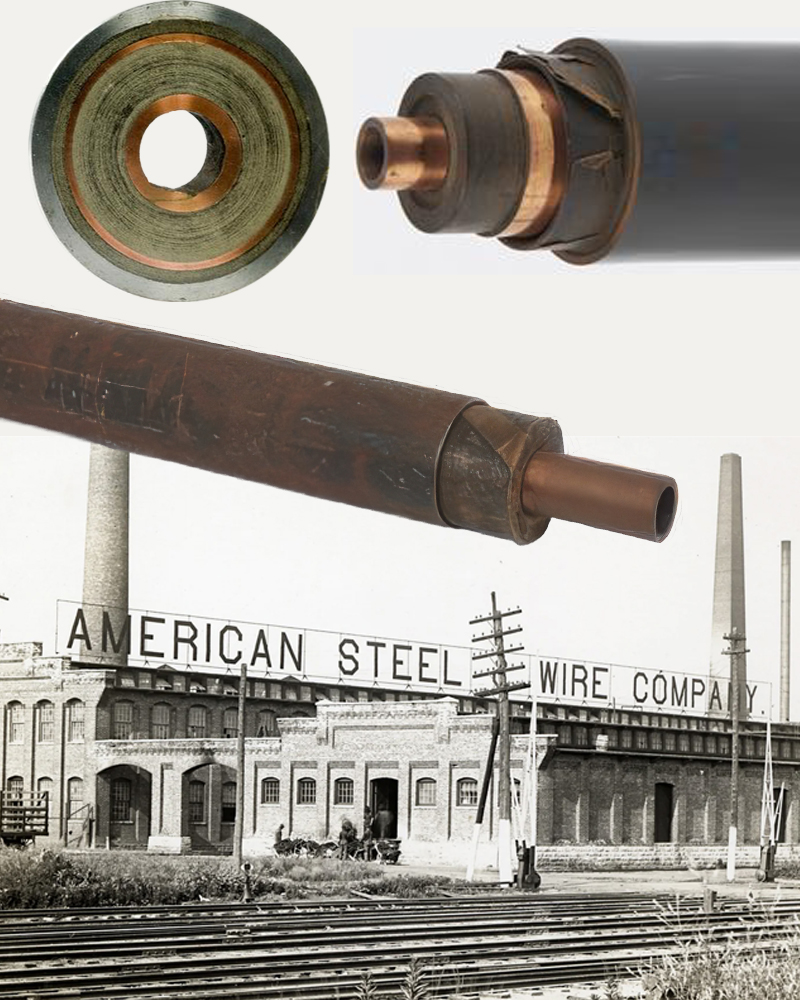
In 1891, the company produced its first rubber- and paper-insulated power cables. It is believed these were the first insulated power distribution cables made in the United States. Production of these heavy-duty, lead-encased and steel-armored power cables was scaled up specifically to supply the surging incandescent lighting and electric railroad industries. This specific lineage evolved into AmerCable.
In 1889, more than 3,000 workers were employed within the company’s three plants. By the turn of the century, the company’s “North Works” on Grove Street and “South Works” in Quinsigamond Village grew into a massive complex, relying heavily on Swedish, Irish, French and other immigrant group labor.
The American Steel & Wire Company
In 1899, Washburn and Moen merged with several other wire manufacturing companies to form the American Steel & Wire Company. At the time, it was the largest company in the nation, with an estimated 20,000 workers employed at the Worcester facilities, most of them at Northworks.
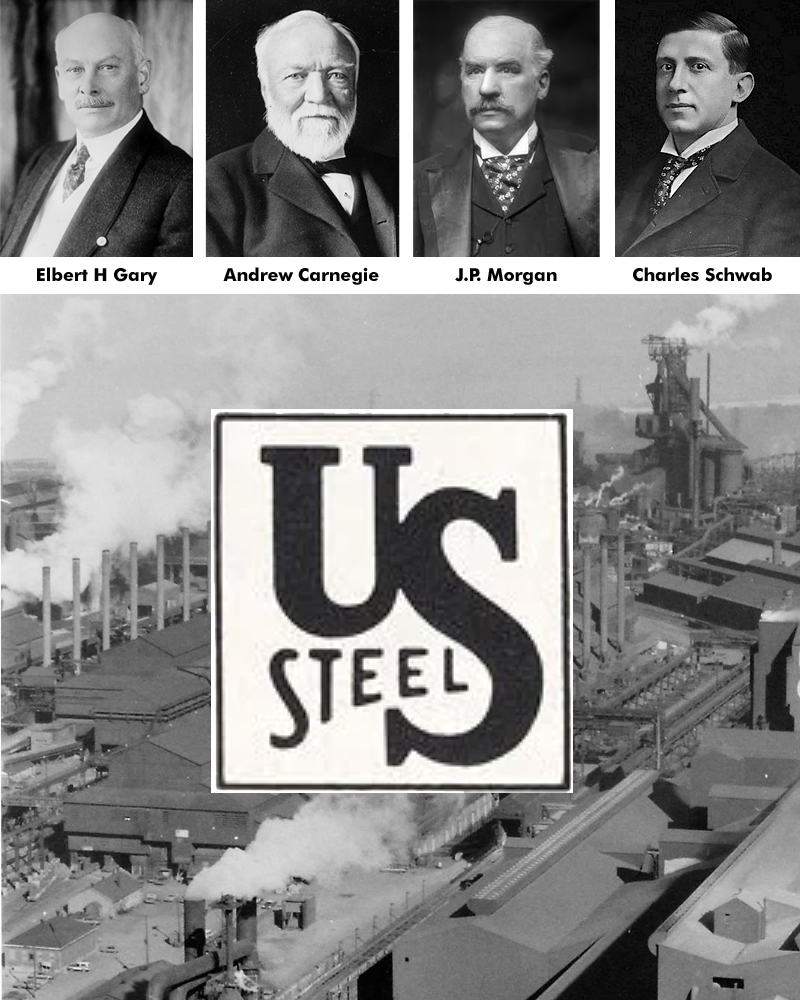
The company, created by Federal Steel Corporation president Elbert H. Gary, recognized that the rapid shift from steam engines to electric motors required heavy industrial power infrastructure, and the company aggressively expanded its high-voltage power cable division.
At this time, the company primarily produced barbed wire, telegraph wire and wire rope, while continuing to expand its research and development of insulated power cable products.
The Deal of the Century
In 1901, Mr. Gary put together the “deal of the century” with legendary American business titans Andrew Carnegie, J.P. Morgan and Charles Schwab by forming the United States Steel Corporation (USS), the world’s first billion-dollar corporation. Mr. Gary served as Chairman of USS until his death in 1927. US Steel was the combination of 10 companies:
- Carnegie Steel
- Federal Steel
- National Steel
- American Steel & Wire
- National Tube Company
- American Sheet Steel Company
- American Tin Plate Company
- American Steel Hoop Company
- American Bridge Company
- Lake Superior Consolidated Iron Mines
When the merger was finalized, American Steel & Wire Company became the largest wire manufacturer in the world.
The Tiger Appears
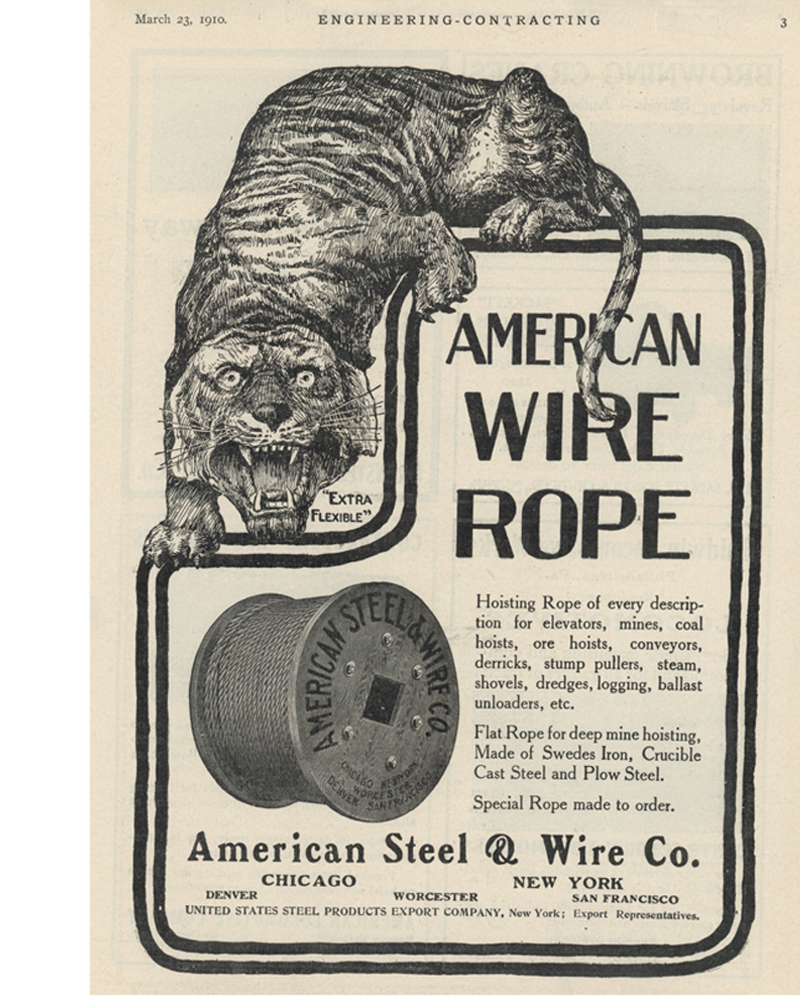
In March of 1910, this full-page advertisement appeared in Engineering-Contracting magazine. This is the first use of a Tiger in the company’s product promotions.
We do not know why a Tiger was selected – we can guess that it is because Tigers are strong, durable and nimble creatures. The caption next to the Tiger says “extra flexible.” The Tiger continues to be a key symbol of AmerCable to this day.
We are sure the marketing guy who came up with this idea finds satisfaction seeing its long-term success from his eternal resting spot.
Tiger® Brand Is Trademarked
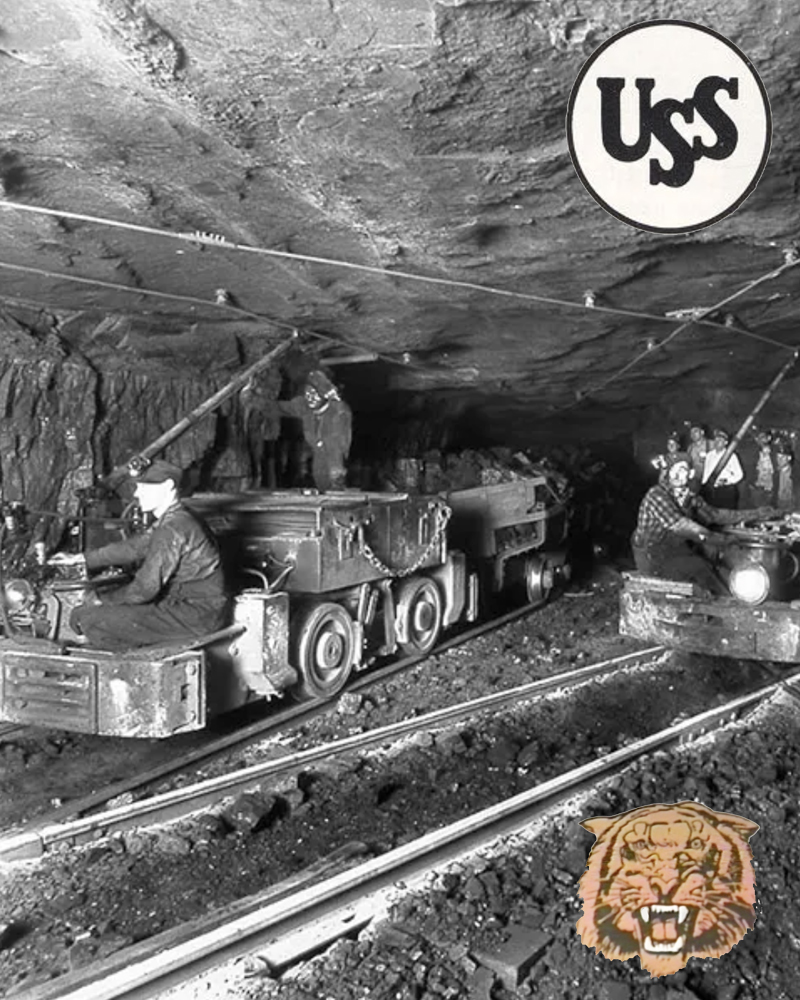
In the 1920s, USS, through its subsidiary U.S. Steel Mining Company, operated more than 30 coal mines in West Virginia, Alabama, Kentucky, Illinois and Pennsylvania. These company-owned mines were primarily established to extract metallurgical coal (coking coal) to fuel the corporation’s steel blast furnaces.
Electric-powered underground equipment, which had been in development for the previous 20 years and was widely deployed, drove the need for the development of flexible power cables that could operate in this harsh environment.
In October 1923, the company applied to trademark Tiger® Brand for its Wire Rope and Insulated Cable divisions.
Surviving The Great Depression
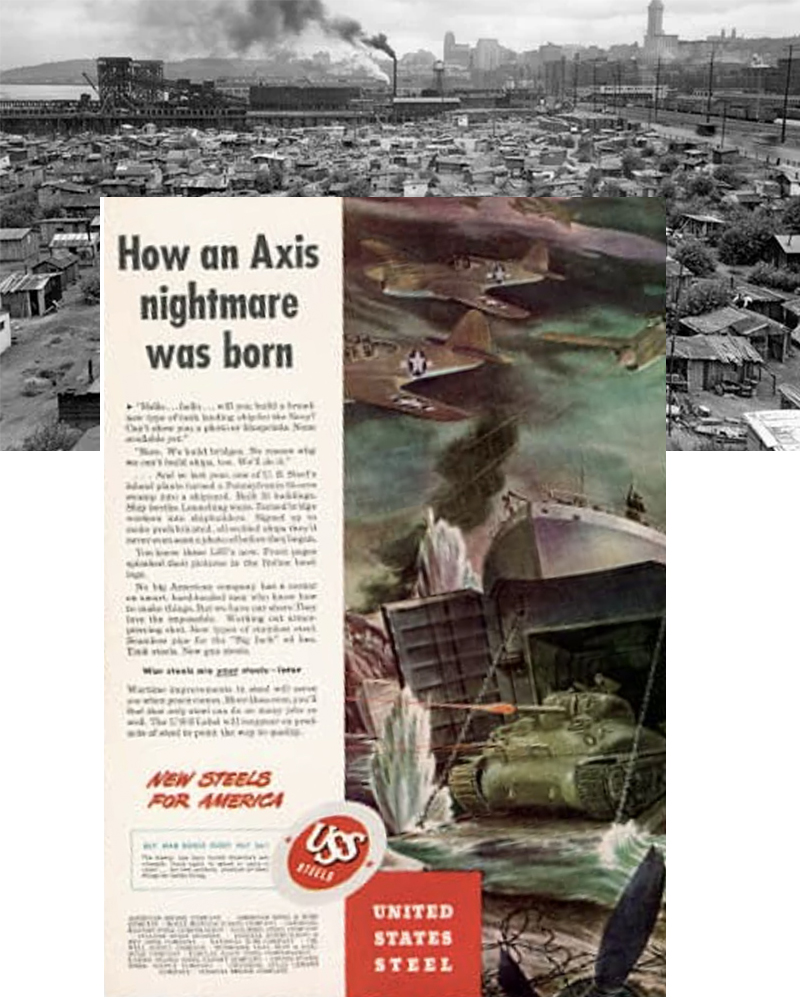
In the 1930s, the company name was changed to USS American Wire & Cable. The Great Depression, from 1929 to 1939, was the longest and deepest economic downturn in modern history and presented many challenges for financial survival, including 2,500 bank failures in 1931, coal and steel demand dropping by 71% and USS having all-time low sales in 1933. Ultimately, 9,000 banks failed, 86,000 US businesses ceased to exist, and worker wages dropped by 60%.
In April 1939, ten years after the crisis began, more than one in five Americans still could not find work. The company and Tiger® Brand managed to survive, and in 1939 with war breaking out in Europe and Asia, the call to action would jumpstart U.S. industrial activity, especially the need for steel and coal.
America & US Steel Go to War
More than 113,000 US Steel employees enlisted or were drafted into the U.S. Armed Forces. This made available, for the first time, meaningful jobs for women in factories. During WWII, almost 14% of the US Steel workforce was female.
Through the war and then all the way through the 1960s, US Steel boomed.
Another Name Change
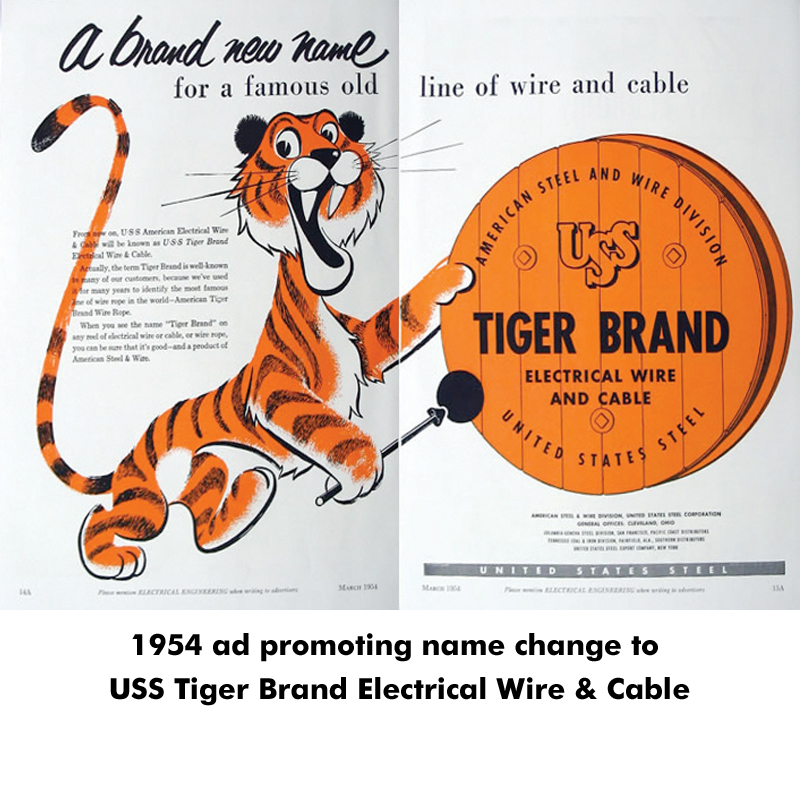
In 1954, Tiger® Brand became so associated with the company that the name was changed to USS Tiger Brand Electrical Wire & Cable! Wire rope continued to be marketed by US Steel under the Tiger Brand name too, but the new name clearly referred to a focus on the electrical wire-and-cable manufacturing operation. Wire rope continued to be part of the narrative and was included in this ad.
“When you see the name ‘Tiger Brand’ on any reel of electrical wire or cable, or wire rope, you can be sure that it’s good – and a product of American Steel & Wire.”
Big Changes in the 1970s
The 1970s brought significant, unfortunate changes for US Steel. Following two decades of rapid growth, world production of steel decelerated markedly. By the mid 70s, a disastrous decline in sales due to low-cost foreign competition and a drop in demand led to a series of USS reorganizations and diversification – including the decision to close its cable division.
The Move to El Dorado
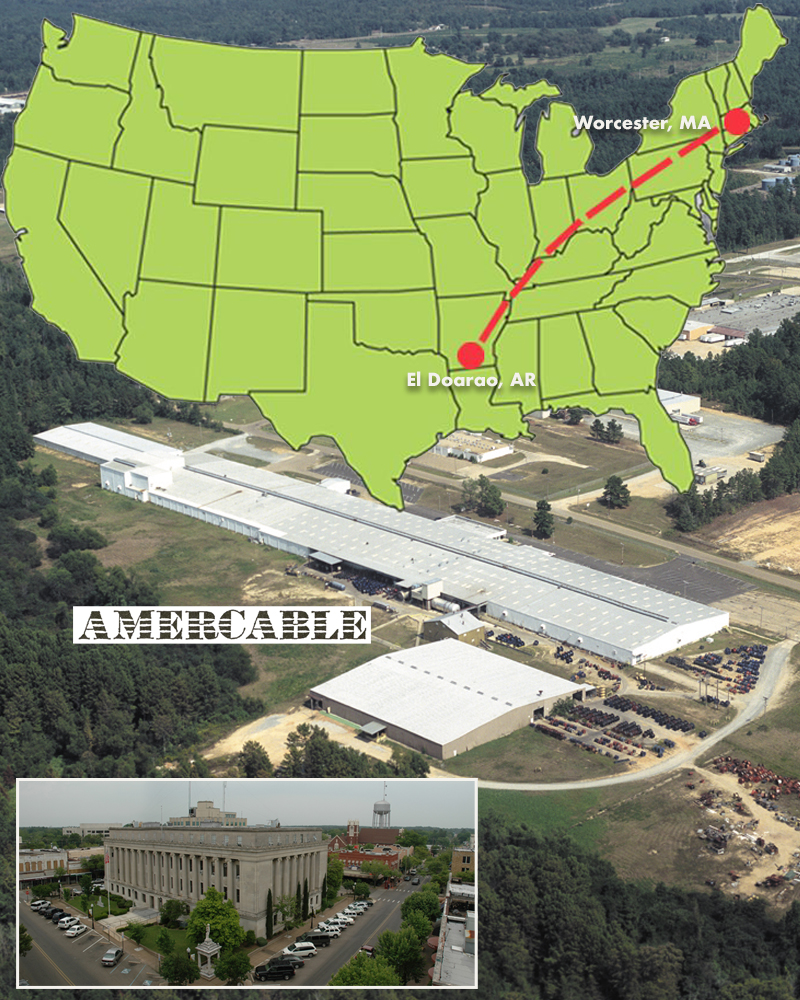
A core, influential group of employees wanted to continue the cable making operation, so USS consented with one big stipulation – they would have to move the factory. The cost of operating the Worcester facility had gotten too high to be profitable. After 79 years of continuous operation in Worcester, Massachusetts, USS signed off on the relocation for Tiger® Brand Wire & Cable and the sale of the Wire Rope division.
El Dorado was selected because there was an existing building (a former furniture factory), and the city offered a favorable incentive package. No doubt the Chamber of Commerce also pitched a hardworking, high-quality workforce in the area.
In 1978, the cable making equipment was moved to 350 Baily Road, which was quite an undertaking. To support the new start in Arkansas, the company was renamed Amercable Incorporated. The steel wire division was sold to Bridon, who still uses the “Tiger” name for a line of steel wire rope.
The 80s Bring New Ownership
Like the decade before, change was the norm for AmerCable in the 1980s. Five years after the move to El Dorado, US Steel continued to unravel due to a deep depression in the steel industry and again went through a series of reorganizations and asset sales to stave off bankruptcy.
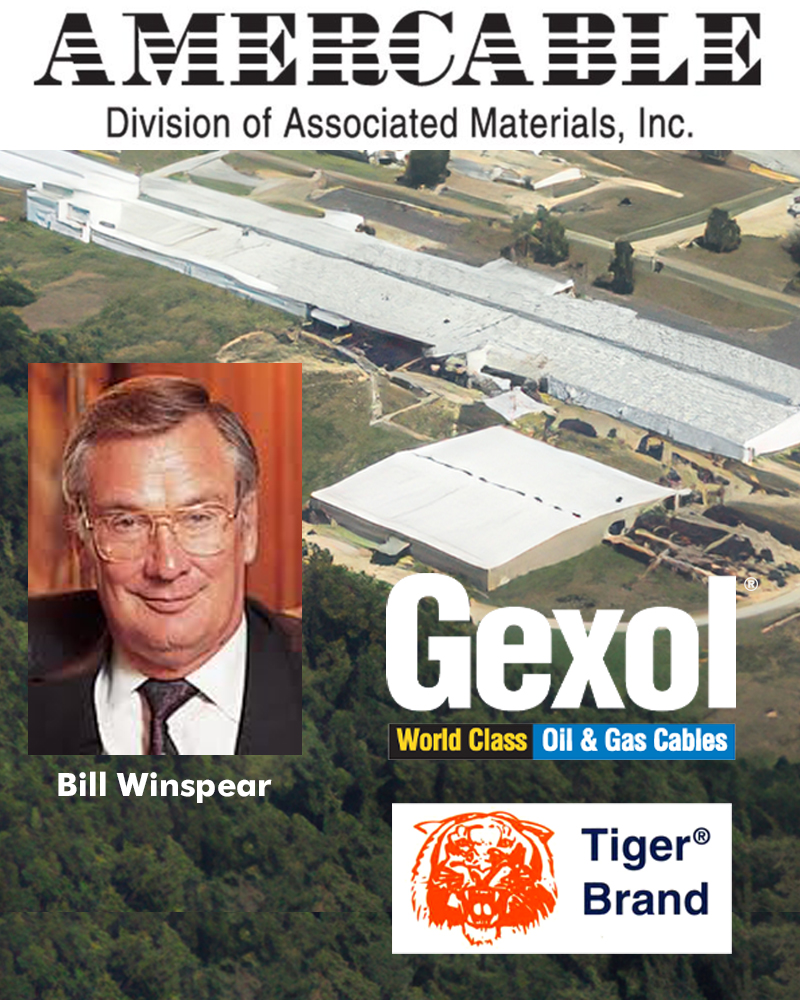
In early 1984, after being a part of USS for 83 years, Amercable was sold to Dallas-based Associated Materials Incorporated (AMI). Owned by entrepreneur Bill Winspear, AMI was a holding company for a group of manufacturing companies similar in size and structure to Amercable. Glen Beattie, who was named president of Amercable in 1978, retained his role under the new ownership group.
“I’ve always preferred small companies,” Mr. Winspear said in assessing his business career. “I define a small company this way: I don’t know everyone in the company, but I know someone who knows everyone in the company. Anyone can get to me pretty fast, and I can get to them. That improves the communication. That improves the efficiency.”
Under AMI, Amercable expanded into the oil & gas market with its new Gexol®-insulated power, control and instrumentation cables. This effort, initiated in 1985, was spearheaded by Tony Davenport, an AmerCable manufacturer’s rep in Houston that saw huge potential in Gexol. Product lines serving the transportation, industrial and military markets were also developed.
Almost Sold…
In early 1990, Amercable was not performing well for Associated Materials Inc (AMI), posting consistent losses. In 1992, AMI attempted to sell Amercable, but there was a recession going on and they could not get book value offers. Ultimately, they decided not to sell because they were afraid the one interested buyer would simply close the factory. Bill Winspear, who owned several companies like Amercable in small towns, could not tolerate the thought of a closure and the negative impact it would have on the El Dorado community.
One small but significant change happened to the name in early 1993 – the addition of the capital C in the name – AmerCable.
The Bob Hogan Era
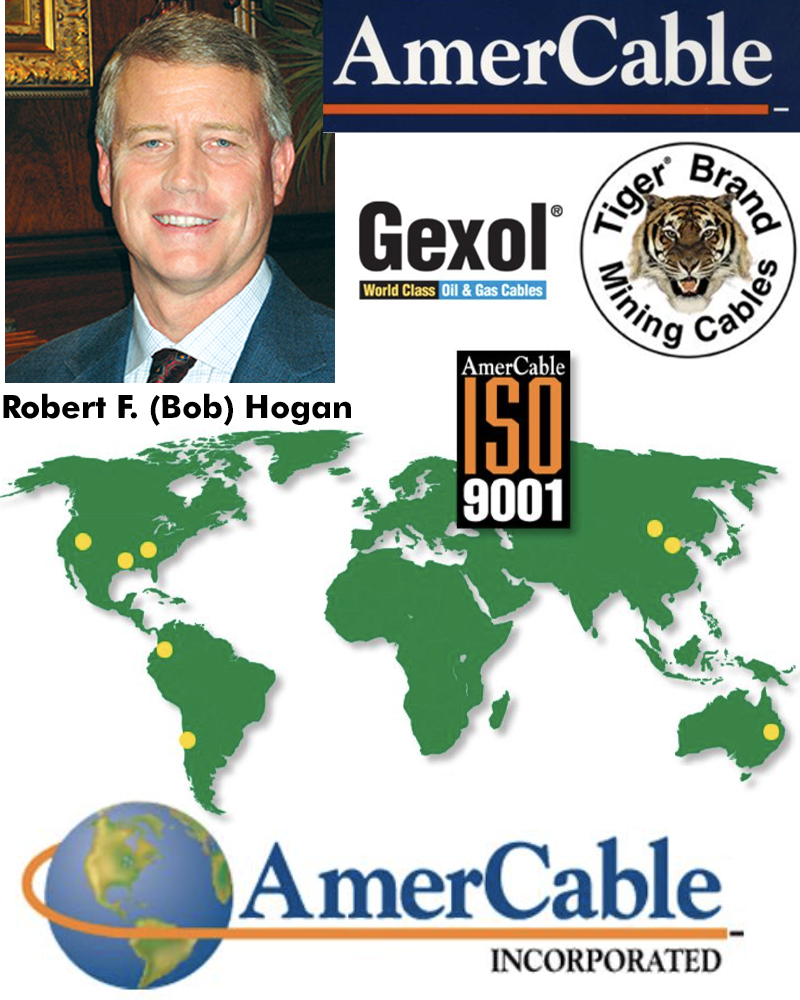
In 1993, Glen Beattie decided to retire. After a nine-year stint as Treasurer and Secretary of Associated Materials, Robert F. (Bob) Hogan, was named President and CEO of AmerCable. Mr. Hogan immediately focused on raising AmerCable’s level of operational excellence or, in simple terms, producing cable faster than anyone else without sacrificing quality and delivering on-time every time.
“I believe speed wins every time,”said Mr. Hogan.
Success did not come easy, but the company had a vision and the drive to achieve it. On-time delivery, short lead times and value-added services were key differentiators, and a motivated, competent team took the company to new financial heights.
In June 2002, AmerCable’s senior management group purchased the company from Associated Materials. The company focused on expanding market positions in the United States and globally by targeting mission-critical harsh environment niche industries requiring high quality, innovative products and value-added services. They also entered opportunistic markets such as the blossoming solar and wind energy industries.
Global Expansion
Just as the company evolved from barbed wire to insulated power cables at the turn of the century, AmerCable sought to expand its products and services into other cable-related business markets.
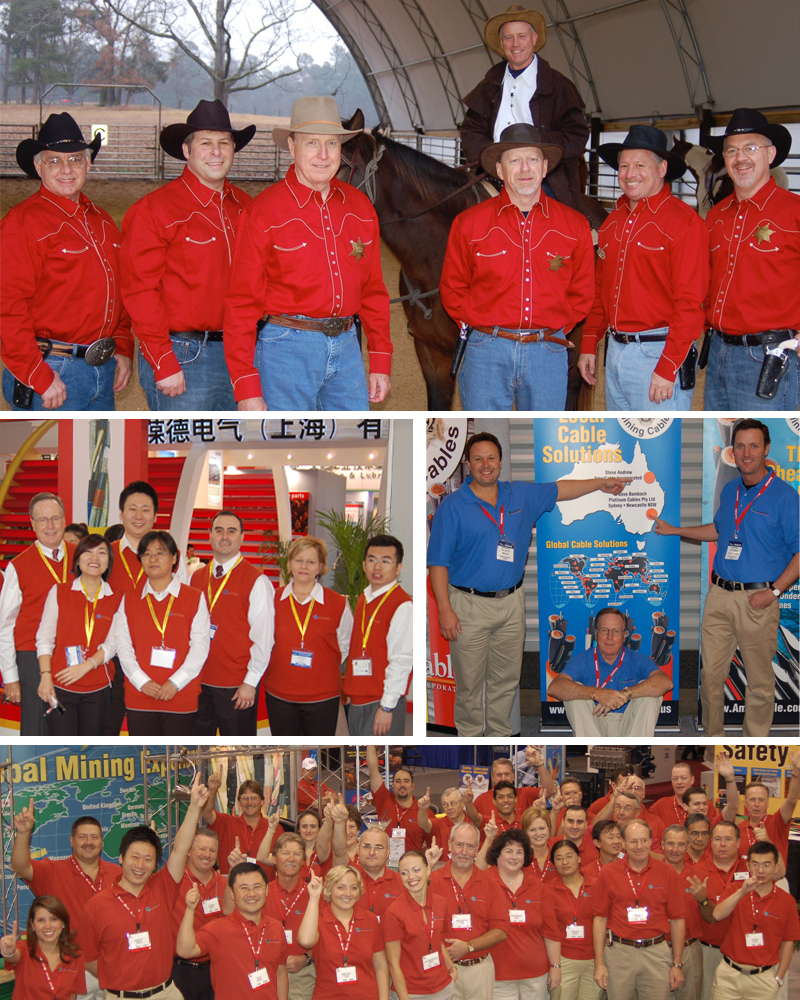
Globally, the company expanded Tiger Brand mining cable sales into South America, China and Australia – eventually selling to 36 countries. They also pursued offshore upstream platform projects around the world with an expanded Oil & Gas sales team, and developed a robust industrial cable business.
AmerCable Systems (2002 – present), produces precision-engineered cable assembly and fiber optic solutions for harsh environment oil and gas/industrial applications. Currently located in Katy, Texas.
AmerRig Services (2011 – 2016) – Houston, Texas-based facility that provided specialized top drive services for the oil and gas land drilling industry.
AmerCable Service Center (2011 – 2019) – Located in Tooele, Utah, the Service Centeer provided cable repair and distribution services for the Western US mining region.
During this period, AmerCable became the leading global producer of photovoltaic (solar) power cables. Ultimately, this business was lost to low-cost international competition.
The Nexans Acquisition
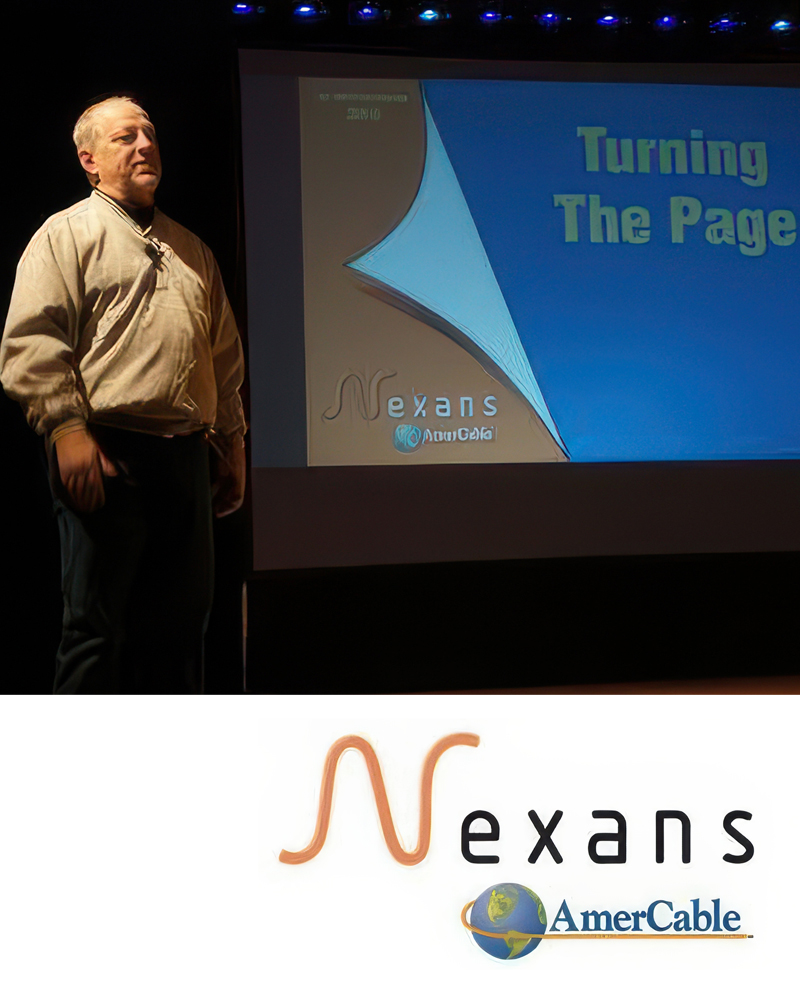
In February 2012, the company was acquired by Nexans, the second-largest cable company in the world. Once again AmerCable was part of a billion-dollar corporation!
When the sale was completed Mr. Hogan, after 28 years with the company, stepped down as President and CEO. Rodney Cole, who had served as AmerCable’s Vice President of Operations since 1995, was named as the new company President.
In April 2012, the company name was changed to Nexans AmerCable.
Nexans geographically restricted AmerCable so it would not compete directly with other Nexans companies around the world. The mining cable business we had developed in China, Australia and South America was greatly reduced or lost.
Mr. Cole, the third President in AmerCable’s history, retired in May of 2017.
Nexans AmerCable
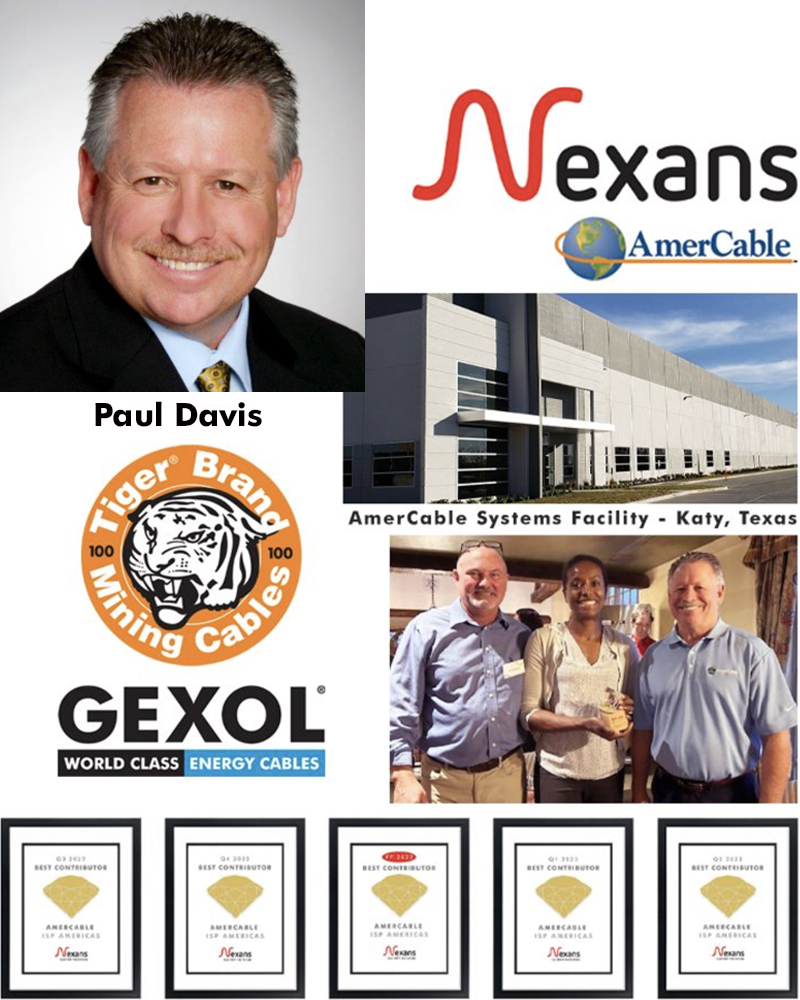
Under Nexans, Tiger Brand continued to be the mining industry’s high-quality cable leader in North America and, in 2023, celebrated 100 years as a brand. GEXOL cables expanded into offshore wind power distribution platforms, and a new facility for AmerCable Systems was opened in Katy, Texas in 2020.
In November 2021, Paul Davis became the sixth President in AmerCable’s history. Mr. Davis, who joined the company in 1999, relied on his deep understanding of AmerCable’s culture to lead the company to record-setting financial success following the COVID pandemic. During this time, AmerCable was acknowledged as the top-performing company in the Nexans Industry & Solutions Portfolio (ISP) Group for Q3 & Q4 2022 and all of FY 2023 and 2024.
Nexans had long stated its desire to focus on green energy and was committed to sell its companies involved in fossil fuel markets, so AmerCable’s success helped speed that process.
A New Chapter Begins!
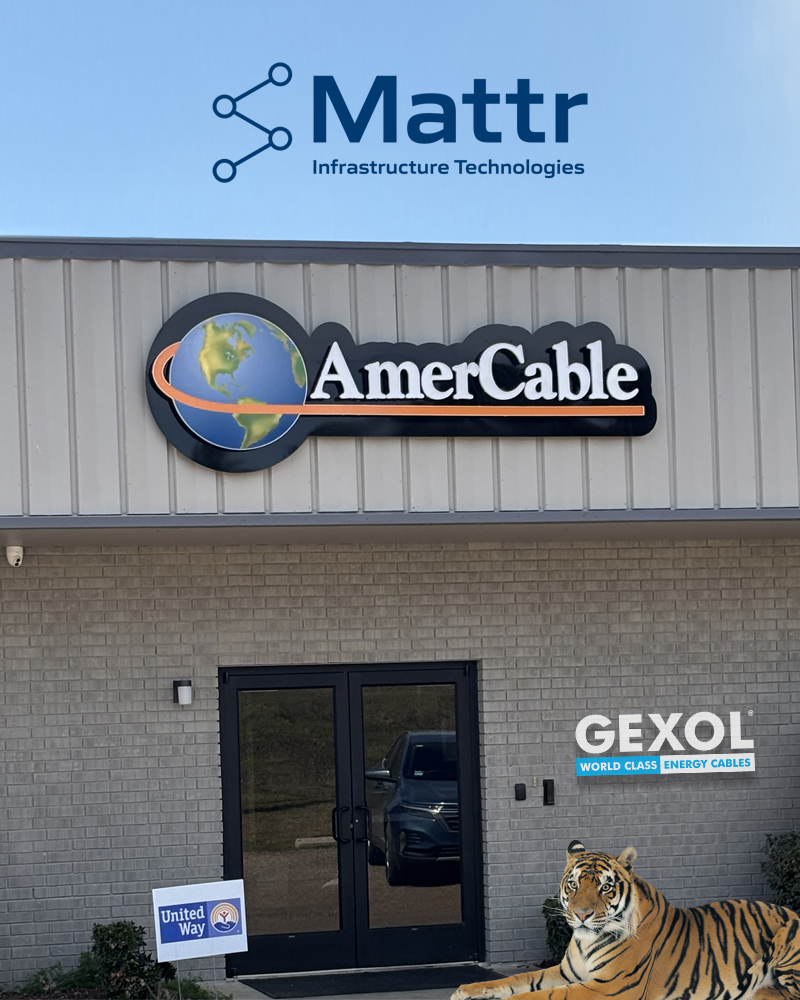
On Jan 2, 2025, Nexans AmerCable was acquired from Nexans by Mattr, a publicly held company (TSX: MATR) based in Toronto, Ontario Canada. The company name was changed back to AmerCable.
Mattr is a global materials technology company broadly serving critical infrastructure markets, including transportation, communication, water management, energy and electrification. Through its two business segments, Composite Technologies and Connection Technologies, Mattr offers highly engineered solutions, technology and products that support infrastructure projects and markets worldwide.
Mattr is very supportive of our markets and is committed to AmerCable’s growth, which is demonstrated by their significant investment in our El Dorado facility to expand capacity and capabilities.
After being geographically limited by Nexans for 13 years, AmerCable is now working to expand globally again, with our first target being the South America mining market. Incredibly, a decade later, we were able to assemble our original South America mining sales team.
LEGAL DISCLAIMER REGARDING AMERCABLE’S HISTORY SUMMARY:
AmerCable Incorporated (” AmerCable “) was originally formed and incorporated in 2002 and is not responsible for any operations predating 2002 or beyond its own distinct company, has always maintained a separate identity from, and is not responsible for, any other company, product, or operation. The suggested history set forth herein(a) is presented solely for the reader’s information regarding the wire and cable industry dating back to 1891; (b) is not intended to be relied upon for any purpose whatsoever; (c) is made with reservation of all rights and with full denial and disclaimer of any association with, or theoretical liability for, any of the entities, products, or operations referenced; and, (d) is made without any warranty or any kind, either express or implied. AmerCable makes no representations or warranties as to the accuracy, reliability, or completeness, and assumes no responsibility with respect to this information or its use.
The historical information set forth herein is not intended to modify, interpret, qualify, supplement or amend any contractual documents relating to the separate identities of historical entities, any asset transfers, or other transactions of any kind. Since its formation in 2002, AmerCable has never merged with nor shared identity with any of the historical manufacturers referenced therein. AmerCable is in no way associated or affiliated with or responsible for any of these historical operations or historical manufacturers or entities and is not responsible for any potential or actual liabilities or obligations related to or arising from those companies, operations, or product lines.